

Quarry House - Derbyshire
A contemporary replacement dwelling within a Derbyshire quarry landscape
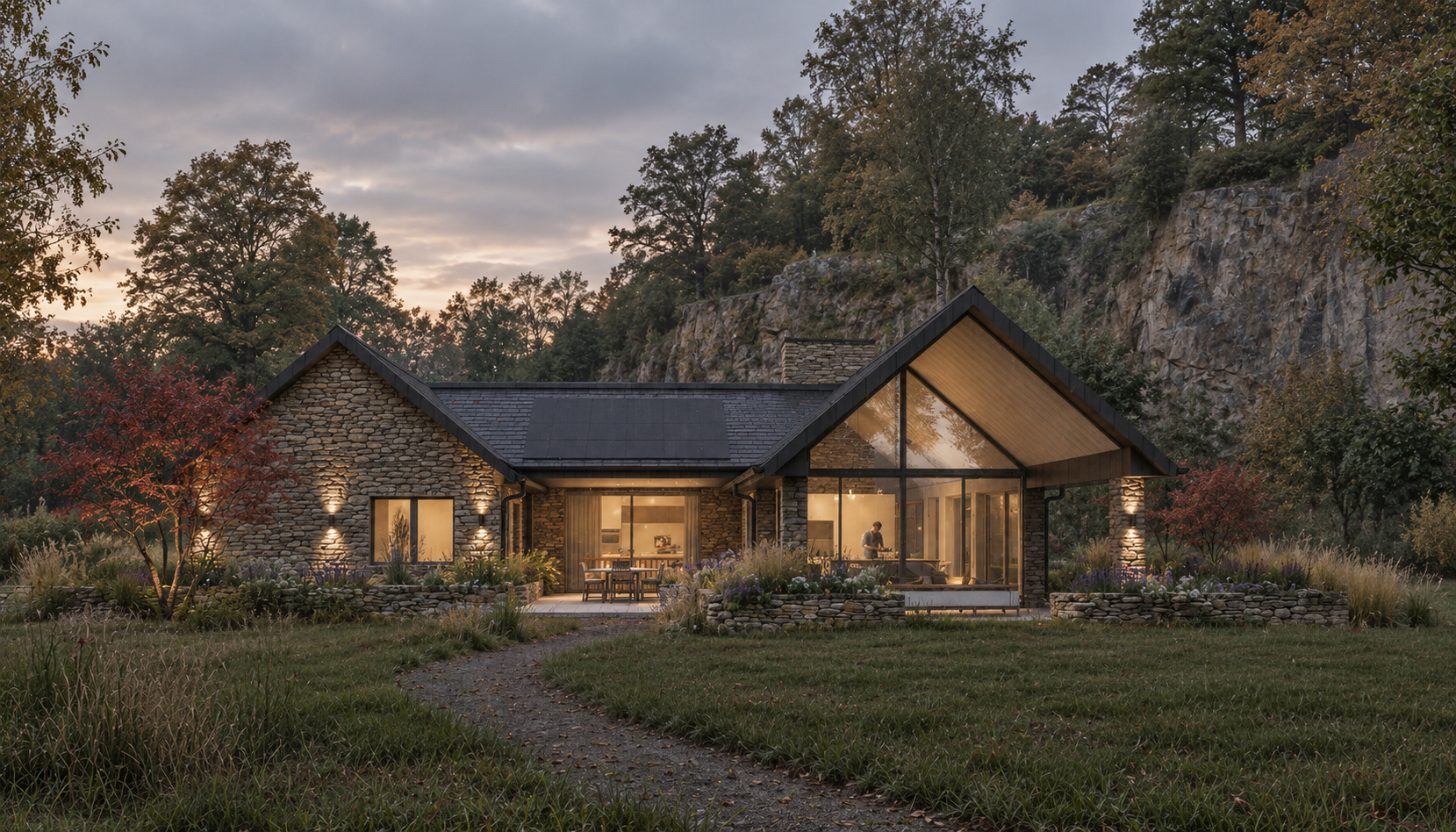
A contemporary replacement dwelling set within the distinctive landscape of a former Derbyshire quarry, the design draws inspiration from its rugged surroundings and rich industrial heritage. The architecture is conceived as a considered response to its setting, bringing together natural materials, carefully composed forms and a strong connection to the surrounding landscape.
Locally sourced stone, reflective of the geology and character of the quarry, forms a defining element of the material palette. Combined with timber detailing, generous areas of glazing and a restrained use of darker finishes, the materials create a subtle dialogue between the building and its dramatic surroundings. The intention is to establish a home that feels rooted in its landscape, whilst expressing a contemporary architectural identity.
The building is carefully positioned to frame views across the quarry, with landscaped areas and considered planting softening the relationship between the architecture and the existing terrain. A combination of native species, naturalistic planting further integrates the dwelling into its setting, enhancing biodiversity and reinforcing its connection to nature.
Sustainability underpins the design approach, with an emphasis on low-energy performance, high levels of insulation, renewable technologies and carefully selected materials to reduce the building's embodied and operational carbon footprint. The result is a distinctive contemporary home that respects the character of its setting whilst providing a sensitive and enduring addition to the Derbyshire landscape.
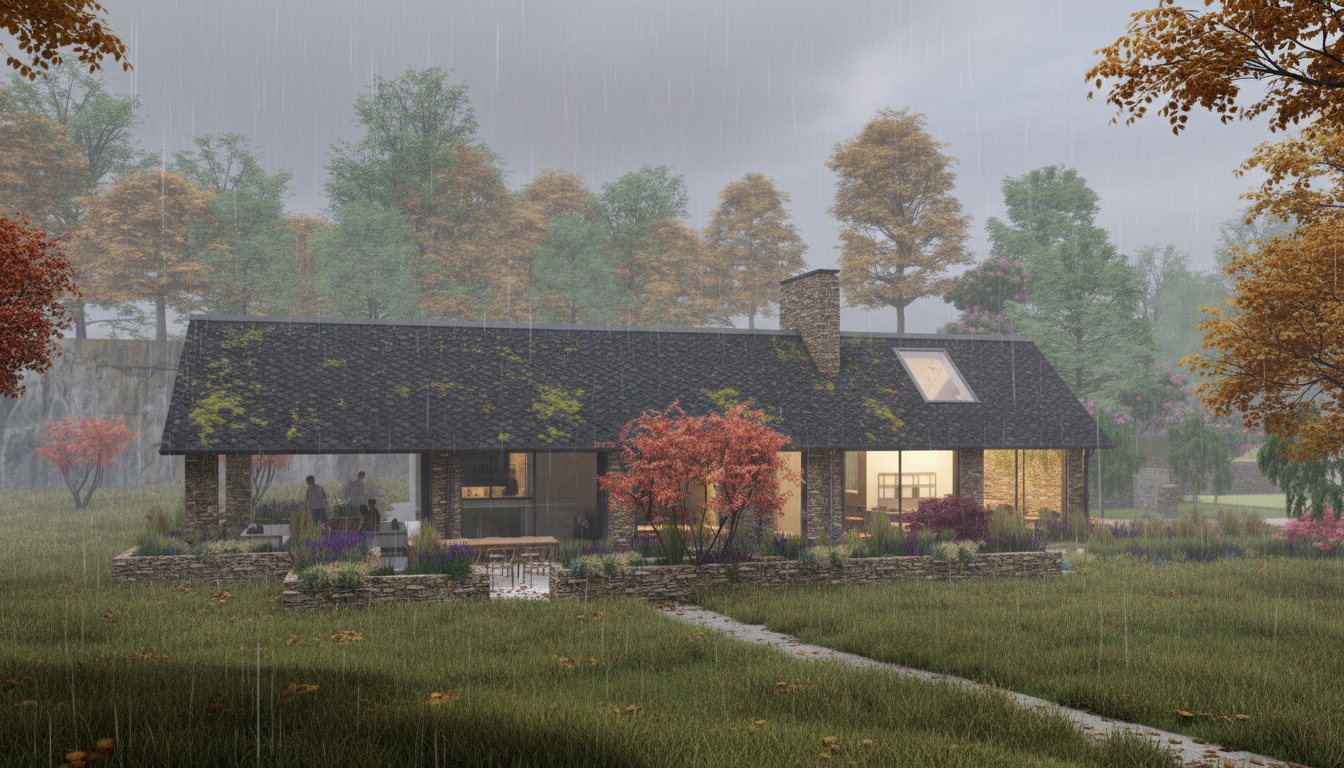
The scheme incorporates a range of sustainable measures, including a green roof that enhances biodiversity and supports local ecology. Electric car charging points and air source heat pumps contribute to the project’s low-carbon strategy. As part of the ecological enhancements, native planting and a wildflower meadow are introduced, enriching the garden setting and creating habitats for pollinators and wildlife.
The result is a sensitively designed intervention that draws on the historic character of the site, while embracing contemporary architectural language and sustainable technologies.